Idioms are colorful expressions that go beyond their literal meanings. They add depth, humor, and cultural flavor to the English language.
When we talk about idioms for “free,” we are exploring phrases that capture ideas of freedom, costlessness, ease, or things without restrictions.
These idioms are extremely useful because they appear in daily conversations, business talks, and even in literature.
Knowing idioms related to “free” can help learners express themselves more naturally and effectively. Instead of saying “without paying,” you can say “free of charge.”
Instead of saying “without restrictions,” you can use “footloose and fancy-free.” These idioms make your English sound less mechanical and more fluent.
Let’s dive into some interesting idioms that connect with the idea of being free—whether it’s freedom of time, money, choice, or worry.
Did You Know?
The phrase “free of charge” has been around since the 14th century. In old English law, “charge” meant responsibility or burden. So when something was “free of charge,” it meant you had no burden to carry. Over time, it evolved to mean “without paying money.” Fascinating, isn’t it?
Idioms About Costlessness
Free of Charge
Meaning: Something that does not cost money.
Example: The hotel provides breakfast free of charge.
Alternative: At no cost.
Note: Commonly used in both formal and informal settings, especially in business offers.
For Free
Meaning: Getting something without paying.
Example: She got the concert tickets for free.
Alternative: Freebie.
Note: Informal, often used in everyday conversations.
On the House
Meaning: Provided at no cost, usually by a restaurant, bar, or business.
Example: The dessert was on the house.
Alternative: Complimentary.
Note: Informal, mostly in hospitality or customer service contexts.
A Freebie
Meaning: Something given without charge, usually as a gift or promotion.
Example: They gave away T-shirts as a freebie.
Alternative: Giveaway.
Note: Informal, often used in marketing or casual talk.
At No Cost
Meaning: Without payment required.
Example: Repairs are done at no cost during the warranty period.
Alternative: Free of charge.
Note: Common in formal and professional writing.
Without a Penny
Meaning: With no money spent.
Example: He managed to travel across the country without a penny.
Alternative: For nothing.
Note: More literary, sometimes dramatic in tone.
For Nothing
Meaning: Without cost or without result.
Example: She helped me for nothing.
Alternative: At no cost.
Note: Used in both formal and informal speech.
Idioms About Freedom and Independence
Footloose and Fancy-Free
Meaning: Without responsibilities or restrictions.
Example: He remained footloose and fancy-free until his 40s.
Alternative: Free as a bird.
Note: Informal, often about lifestyle and relationships.
Free as a Bird
Meaning: Completely free and unrestricted.
Example: After retiring, she felt free as a bird.
Alternative: Without a care in the world.
Note: Very common in daily use.
Free Spirit
Meaning: A person who lives independently, without following rules.
Example: She’s always been a free spirit, traveling the world alone.
Alternative: Rebel.
Note: Informal, often describing personality.
Liberty at Last
Meaning: Finally free from restrictions or control.
Example: After the exams, students felt liberty at last.
Alternative: Freedom at last.
Note: Used in casual or celebratory contexts.
Break Free
Meaning: Escape from control, habit, or restrictions.
Example: He broke free from his toxic job.
Alternative: Cut loose.
Note: Used in daily and motivational speech.
Free Ride
Meaning: Enjoying benefits without effort or cost.
Example: He got a free ride on the project thanks to his teammates.
Alternative: Something for nothing.
Note: Informal, often critical.
Fancy-Free
Meaning: Without worries or obligations.
Example: She was young, fancy-free, and happy.
Alternative: Carefree.
Note: Common in literature and everyday speech.
Scott-Free
Meaning: Escaping without punishment or harm.
Example: The thief got away scott-free.
Alternative: Walk free.
Note: Informal, often about justice or fairness.
Idioms About Ease and Lack of Burden
Free and Easy
Meaning: Relaxed, informal, and comfortable.
Example: The party had a free and easy atmosphere.
Alternative: Laid-back.
Note: Informal, often describing mood or situations.
Free Flow
Meaning: Smooth and unrestricted movement.
Example: The traffic was free flow after midnight.
Alternative: Uninterrupted.
Note: Used in both formal and casual contexts.
Free Hand
Meaning: Permission to do something in one’s own way.
Example: The manager gave her a free hand in designing the campaign.
Alternative: Carte blanche.
Note: Common in workplace and professional contexts.
Free Time
Meaning: Spare time not occupied by work.
Example: I like reading in my free time.
Alternative: Leisure time.
Note: Everyday use, neutral tone.
Free Rein
Meaning: Full freedom to make decisions.
Example: The teacher gave students free rein for the project.
Alternative: Full control.
Note: Used in professional and creative settings.
Freewheeling
Meaning: Acting without concern or restriction.
Example: He has a freewheeling style of leadership.
Alternative: Carefree.
Note: Informal, sometimes critical.
Free Spirit Lifestyle
Meaning: A way of living with independence and no ties.
Example: Their free spirit lifestyle took them around the world.
Alternative: Bohemian.
Note: Informal, lifestyle-related.
Free from Worry
Meaning: Without stress or anxiety.
Example: The vacation left her free from worry.
Alternative: Carefree.
Note: Common in casual daily speech.
Idioms About Opportunity and Permission
Free Country
Meaning: A phrase used to emphasize individual choice.
Example: Do what you want—it’s a free country!
Alternative: Your choice.
Note: Informal, sometimes defensive.
Free Will
Meaning: The ability to choose independently.
Example: He volunteered of his own free will.
Alternative: By choice.
Note: Used in both formal and religious/philosophical contexts.
Free Access
Meaning: Open permission to enter or use.
Example: Students have free access to the library.
Alternative: Open entry.
Note: Common in formal and institutional settings.
Free and Clear
Meaning: Without debt or restriction.
Example: He owns the house free and clear.
Alternative: Debt-free.
Note: Often used in financial contexts.
Free Speech
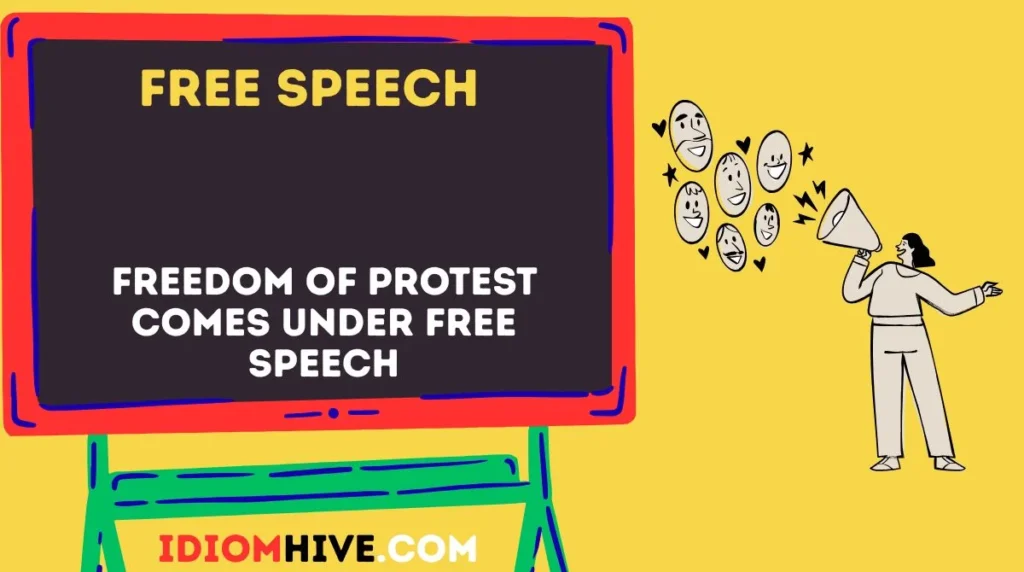
Meaning: The right to express opinions openly.
Example: Freedom of protest comes under free speech.
Alternative: Freedom of expression.
Note: Formal, political, and social discussions.
Free Trade
Meaning: Commerce without restrictions or tariffs.
Example: The two countries agreed on free trade.
Alternative: Open trade.
Note: Common in economics and politics.
Free Exchange
Meaning: Open and honest discussion.
Example: The debate allowed a free exchange of ideas.
Alternative: Open dialogue.
Note: Formal, academic, and business use.
Free Access Pass
Meaning: Unlimited permission or entry without cost.
Example: The festival gave me a free access pass.
Alternative: Open entry.
Note: Informal, often in events.
How to Use These Idioms in Daily Life
- Speaking: Use them naturally in conversations. Instead of saying “It was free,” say “It was on the house.”
- Writing: In essays, articles, or professional emails, use formal idioms like “at no cost” or “free access.”
- Professional Usage: In meetings, idioms like “free rein” or “a free hand” show confidence and fluency.
Common Mistakes Learners Make with Idioms
- Wrong: The drinks were free of cost.
Correct: The drinks were free of charge. - Wrong: He is a free bird.
Correct: He is free as a bird. - Wrong: She gave me a free rain to decide.
Correct: She gave me free rein to decide.
FAQs
1. What does “on the house” mean?
It means something is provided for free, usually in restaurants or businesses.
2. Is “for free” correct English?
Yes, it’s informal but widely accepted in everyday conversation.
3. What is the difference between “free of charge” and “at no cost”?
Both mean the same, but “free of charge” is more common in everyday use, while “at no cost” sounds more formal.
4. Can I use idioms in professional writing?
Yes, but choose formal ones like “at no cost,” “free access,” or “free rein.” Avoid casual ones like “on the house.”
5. What does “scott-free” mean?
It means escaping punishment or responsibility without consequences.
Conclusion
Idioms about “free” capture ideas of costlessness, freedom, and independence. From “on the house” to “free as a bird,” these expressions enrich conversations and help you sound more natural in English.
They are powerful tools in daily life, professional communication, and even creative writing. By learning and practicing them, you can express yourself with greater style and clarity.
So, next time you want to talk about something without limits or cost, sprinkle in one of these idioms—you’ll sound fluent and confident!