Language is more than just words—it is also about expression, tone, and culture. One of the most colorful ways people express themselves in English is through idioms.
Idioms are short phrases whose meanings go beyond their literal words. For example, when someone says they are “walking on air,” it doesn’t mean they are flying—it means they are extremely happy. These expressions make language richer, more engaging, and often more memorable.
When it comes to feelings, idioms are especially powerful. Emotions can be complex, and idioms help capture them in ways plain words cannot.
By learning idioms for emotions, you can sound more natural, connect better with others, and even understand movies, songs, and conversations more easily.
Let’s dive into some of the most common idioms that describe joy, anger, sadness, fear, and mixed feelings.
Did You Know?
The word “idiom” comes from the Greek word “idiōma,” which means “special feature” or “peculiarity.” This makes sense because idioms are unique to each language and culture. What’s fascinating is that many idioms about emotions are universal—cultures all around the world use creative expressions to describe happiness, anger, or sadness!
Idioms for Happiness and Joy
Over the moon
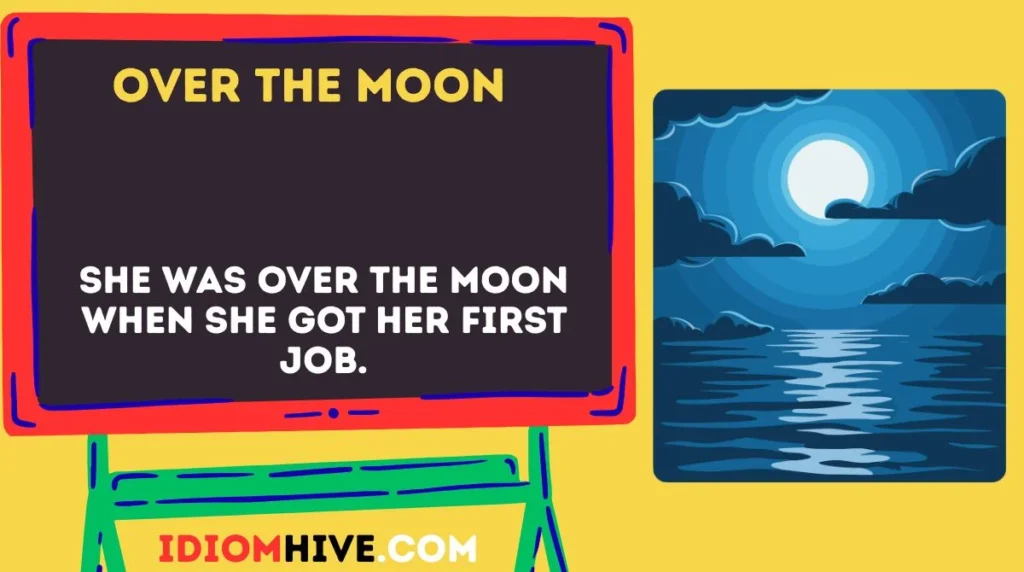
Meaning: Extremely happy.
Example: She was over the moon when she got her first job.
Alternative: On cloud nine.
Note: Common in daily conversations when sharing good news.
Walking on air
Meaning: Feeling very happy and light.
Example: After winning the scholarship, he was walking on air.
Alternative: In seventh heaven.
Note: Mostly used in informal speech.
On cloud nine
Meaning: Very joyful or delighted.
Example: They were on cloud nine after their wedding.
Alternative: Over the moon.
Note: Popular idiom used in everyday English.
In seventh heaven
Meaning: Extremely delighted, as if in paradise.
Example: She was in seventh heaven during her vacation in Paris.
Alternative: Walking on sunshine.
Note: Often used for personal happiness.
Tickled pink
Meaning: Very pleased or delighted.
Example: I was tickled pink by her kind words.
Alternative: Thrilled to bits.
Note: Informal and lighthearted.
Full of the joys of spring
Meaning: Energetic and joyful.
Example: He came back full of the joys of spring after his holiday.
Alternative: In high spirits.
Note: Often used for cheerful moods.
Grin from ear to ear
Meaning: Smiling widely due to happiness.
Example: She had a grin from ear to ear when she saw her results.
Alternative: Beam with joy.
Note: Visual idiom often used in storytelling.
Jump for joy
Meaning: Show excitement and happiness physically.
Example: They jumped for joy after hearing the good news.
Alternative: Cheer with delight.
Note: Used in both spoken and written English.
Idioms for Anger and Frustration
Blow a fuse
Meaning: Suddenly become very angry.
Example: He blew a fuse when he saw the mess in the kitchen.
Alternative: Lose your temper.
Note: Informal, used in daily life.
See red
Meaning: Become very angry.
Example: She saw red when someone insulted her best friend.
Alternative: Hot under the collar.
Note: Common in storytelling.
Hot under the collar
Meaning: Annoyed or upset.
Example: He got hot under the collar when his idea was rejected.
Alternative: Worked up.
Note: Slightly formal but often used humorously.
Fly off the handle
Meaning: React angrily without warning.
Example: Don’t fly off the handle over small things.
Alternative: Lose it.
Note: Informal, common in spoken English.
Steamed up
Meaning: Feeling angry or upset.
Example: She was steamed up after the argument.
Alternative: Riled up.
Note: Very informal, casual tone.
Bite someone’s head off
Meaning: Speak angrily or sharply to someone.
Example: He bit my head off just because I asked a question.
Alternative: Snap at someone.
Note: Used to describe sharp anger.
At the end of your rope
Meaning: Losing patience.
Example: I’m at the end of my rope with this noisy neighbor.
Alternative: Fed up.
Note: Expresses frustration and limits of tolerance.
Blow one’s top
Meaning: Explode in anger.
Example: The teacher blew her top when the class wouldn’t listen.
Alternative: Go ballistic.
Note: Very expressive, often in informal contexts.
Idioms for Sadness and Disappointment
Down in the dumps
Meaning: Feeling very sad.
Example: He’s been down in the dumps since losing his job.
Alternative: In low spirits.
Note: Everyday phrase for sadness.
Cry over spilled milk
Meaning: Be upset over something that cannot be changed.
Example: It’s no use crying over spilled milk—move on.
Alternative: What’s done is done.
Note: Common proverb-like idiom.
Broken-hearted
Meaning: Deeply sad due to loss or heartbreak.
Example: She was broken-hearted after the breakup.
Alternative: Heartbroken.
Note: Used for strong emotional pain.
Feeling blue
Meaning: Feeling sad or depressed.
Example: I’ve been feeling blue all week.
Alternative: Low-spirited.
Note: Very common in both formal and informal English.
Heavy heart
Meaning: Feeling deep sadness.
Example: He left the country with a heavy heart.
Alternative: Sad at heart.
Note: Often used in emotional or poetic writing.
Misery loves company
Meaning: Sad people like to be around others who are also sad.
Example: Don’t let her negativity pull you down—misery loves company.
Alternative: Shared sorrow.
Note: Often used as advice.
Have a lump in your throat
Meaning: Feel emotional or close to tears.
Example: I had a lump in my throat during the farewell.
Alternative: Choked up.
Note: Used in emotional contexts.
Downhearted
Meaning: Very discouraged or sad.
Example: He felt downhearted after the rejection.
Alternative: Crestfallen.
Note: Used more in writing than in speaking.
Idioms for Fear, Worry, and Mixed Feelings
Cold feet
Meaning: Nervous about something important.
Example: She got cold feet before her wedding.
Alternative: Hesitate at the last moment.
Note: Very common for big life decisions.
Butterflies in the stomach
Meaning: Nervous excitement.
Example: He had butterflies in his stomach before the performance.
Alternative: Stage fright.
Note: Informal, often used by students or performers.
Scared stiff
Meaning: Extremely afraid.
Example: I was scared stiff during the horror movie.
Alternative: Frozen with fear.
Note: Everyday spoken English.
Shaken up
Meaning: Disturbed or upset after something scary.
Example: She was shaken up after the car accident.
Alternative: Distressed.
Note: Casual, empathetic tone.
Get a grip
Meaning: Control your emotions, especially fear or panic.
Example: You need to get a grip before the meeting.
Alternative: Pull yourself together.
Note: Often used in professional or serious contexts.
Lose sleep over

Meaning: Worry a lot about something.
Example: She’s losing sleep over her exams.
Alternative: Toss and turn with worry.
Note: Used in daily speech.
Give someone the jitters
Meaning: Make someone nervous.
Example: Public speaking gives me the jitters.
Alternative: Make someone uneasy.
Note: Informal expression.
Not know whether to laugh or cry
Meaning: Have mixed emotions about something.
Example: When I heard the story, I didn’t know whether to laugh or cry.
Alternative: Torn between emotions.
Note: Casual, used in relatable situations.
How to Use These Idioms in Daily Life
Idioms for emotions can be used in many ways:
- Speaking: Use them in conversations to sound more natural. For example, instead of saying “I’m very happy,” say “I’m over the moon.”
- Writing: Spice up stories, essays, or blogs with idioms to make your writing engaging.
- Professional settings: Use idioms carefully in presentations or business emails to show fluency, but avoid overly informal ones like “tickled pink.”
Common Mistakes Learners Make With Idioms
- Using idioms literally
❌ “She was walking on air at the airport.” (Wrong, unless she’s actually flying!)
✅ “She was walking on air after winning the prize.” - Mixing idioms incorrectly
❌ “I’m over the seventh heaven.”
✅ “I’m in seventh heaven.” - Overusing idioms
Too many idioms in one sentence can confuse listeners. Use them naturally and only where they fit.
FAQs
1. What are idioms for emotions?
They are phrases that describe feelings in a colorful, non-literal way. For example, “feeling blue” means being sad.
2. Are idioms formal or informal?
Most are informal, but some (like “with a heavy heart”) work well in formal writing.
3. Why should I learn idioms?
They make your English sound fluent, natural, and more connected to real culture.
4. Can idioms be used in professional English?
Yes, but choose carefully. Use neutral idioms in business settings and avoid overly casual ones.
5. Do all cultures use idioms about emotions?
Yes, though the expressions differ. Every culture has creative ways to describe feelings.
Conclusion
Emotions are part of everyday life, and idioms make them easier to express with flair. Instead of saying you are just happy or sad, you can say you’re “over the moon” or “down in the dumps.
” These idioms help you connect better with people, improve your speaking and writing, and enjoy English more.
The next time you want to share your feelings, try slipping one of these expressions into your conversation—you’ll sound more natural and confident.