Dreams are a fascinating part of human life. They can mean the visions we see while sleeping, or they can represent our deepest hopes, goals, and desires.
In English, idioms about dreams are widely used to talk about ambitions, imagination, and even unrealistic expectations. Idioms are colorful expressions that don’t mean exactly what the words say but carry a deeper or figurative meaning.
Learning idioms for dreams not only helps you sound more natural and fluent but also makes your conversations richer and more engaging.
Whether you want to describe chasing your goals, talking about wishful thinking, or highlighting unrealistic plans, idioms for dreams give you the perfect way to say it.
In this article, we’ll explore some of the most popular idioms connected to dreams, along with their meanings, examples, and notes on how to use them in daily life.
Did You Know?
The phrase “pipe dream” originally came from the 19th century, referring to the hallucinations experienced by people who smoked opium pipes. Over time, it shifted to mean unrealistic hopes or impossible plans. That’s how dreams became linked with both creativity and impracticality in idioms.
Idioms About Following Dreams and Ambitions
Living the dream
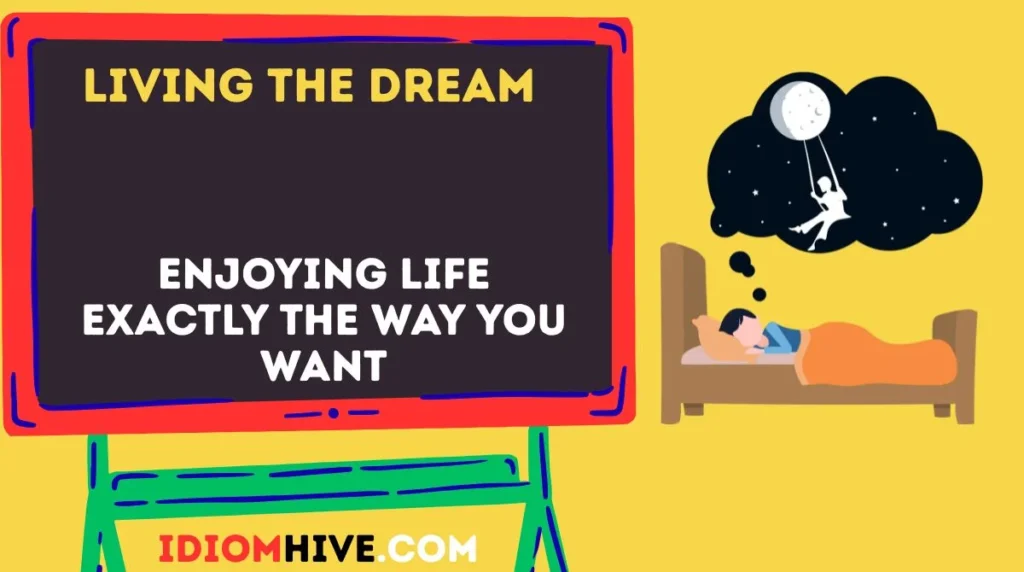
Meaning: Enjoying life exactly the way you want.
Example: “Ever since she opened her bakery, she’s been living the dream.”
Alternative Idiom: On cloud nine.
Reflection: Common in informal speech when people describe satisfaction with their lifestyle.
Chase your dreams
Meaning: Work hard to achieve your goals.
Example: “He moved abroad to chase his dreams of becoming a filmmaker.”
Alternative Idiom: Follow your heart.
Reflection: Encourages ambition, often used in motivational contexts.
Dream come true
Meaning: Something you always wished for has finally happened.
Example: “Getting this scholarship is truly a dream come true.”
Alternative Idiom: Wish fulfilled.
Reflection: Frequently used in both formal and informal situations.
Dare to dream
Meaning: Be bold enough to imagine big possibilities.
Example: “Great inventions happen when people dare to dream.”
Alternative Idiom: Think big.
Reflection: Often used in motivational speeches and writing.
Beyond your wildest dreams
Meaning: Something better than you could ever imagine.
Example: “The success of the movie went beyond their wildest dreams.”
Alternative Idiom: More than expected.
Reflection: Used in positive contexts, both casual and formal.
Living in a dream world
Meaning: Thinking unrealistically or ignoring reality.
Example: “If you think success comes without effort, you’re living in a dream world.”
Alternative Idiom: Head in the clouds.
Reflection: Informal, usually critical.
Follow your dreams
Meaning: Pursue what you really want in life.
Example: “Teachers always tell students to follow their dreams.”
Alternative Idiom: Go after your goals.
Reflection: A popular phrase in inspirational talks.
Make your dreams a reality
Meaning: Turn your hopes into achievements.
Example: “With hard work, you can make your dreams a reality.”
Alternative Idiom: Bring to life.
Reflection: Common in motivational and professional contexts.
Idioms About Unrealistic or Impossible Dreams
Pipe dream
Meaning: An unrealistic or impossible plan.
Example: “Owning a private island is just a pipe dream for most people.”
Alternative Idiom: Castles in the air.
Reflection: Informal, used to criticize unrealistic ideas.
Fool’s paradise
Meaning: A state of happiness based on false hopes.
Example: “He was living in a fool’s paradise, believing his small shop would make him a millionaire overnight.”
Alternative Idiom: False hope.
Reflection: Semi-formal, used to describe illusions.
Building castles in the air
Meaning: Making grand but impractical plans.
Example: “Talking about world tours without money is like building castles in the air.”
Alternative Idiom: Daydreaming.
Reflection: Informal, often critical.
Wishful thinking
Meaning: Hoping for something that’s unlikely to happen.
Example: “Believing you’ll win the lottery is just wishful thinking.”
Alternative Idiom: False hope.
Reflection: Common in everyday conversation.
A dreamer
Meaning: Someone who imagines a lot but may not be practical.
Example: “He’s a dreamer, always coming up with wild ideas.”
Alternative Idiom: Idealist.
Reflection: Neutral, can be positive or negative depending on context.
A pipe dreamer
Meaning: A person who constantly imagines impossible things.
Example: “Stop being a pipe dreamer and focus on realistic goals.”
Alternative Idiom: Starry-eyed dreamer.
Reflection: Used casually in criticism.
Chasing rainbows
Meaning: Trying to achieve something impossible.
Example: “He’s chasing rainbows by hoping to be rich without working.”
Alternative Idiom: Wild goose chase.
Reflection: Informal, critical.
Starry-eyed
Meaning: Too idealistic, ignoring reality.
Example: “She’s too starry-eyed about becoming famous overnight.”
Alternative Idiom: Head in the clouds.
Reflection: Informal, often for young dreamers.
Daydreaming
Meaning: Letting your mind wander into pleasant imagination.
Example: “He was caught daydreaming in class.”
Alternative Idiom: In a world of your own.
Reflection: Common in informal settings.
Idioms About Sweet or Pleasant Dreams
Sweet dreams
Meaning: Wishing someone a good night’s sleep.
Example: “Good night, sweet dreams!”
Alternative Idiom: Sleep tight.
Reflection: Very informal and warm.
Pleasant dreams
Meaning: Hoping someone sleeps well with happy dreams.
Example: “Pleasant dreams, see you in the morning.”
Alternative Idiom: Dream sweetly.
Reflection: Polite, often used with children.
Dreamland
Meaning: A state of sleep.
Example: “The baby is already in dreamland.”
Alternative Idiom: Asleep.
Reflection: Casual, often in family settings.
Dream away
Meaning: Spend time in pleasant thoughts.
Example: “She spent the afternoon dreaming away in the garden.”
Alternative Idiom: Drift off.
Reflection: Poetic, informal.
Living in dreamland
Meaning: Being disconnected from reality.
Example: “If he thinks life is always easy, he’s living in dreamland.”
Alternative Idiom: In la-la land.
Reflection: Informal, sometimes humorous.
Sleep like a dream
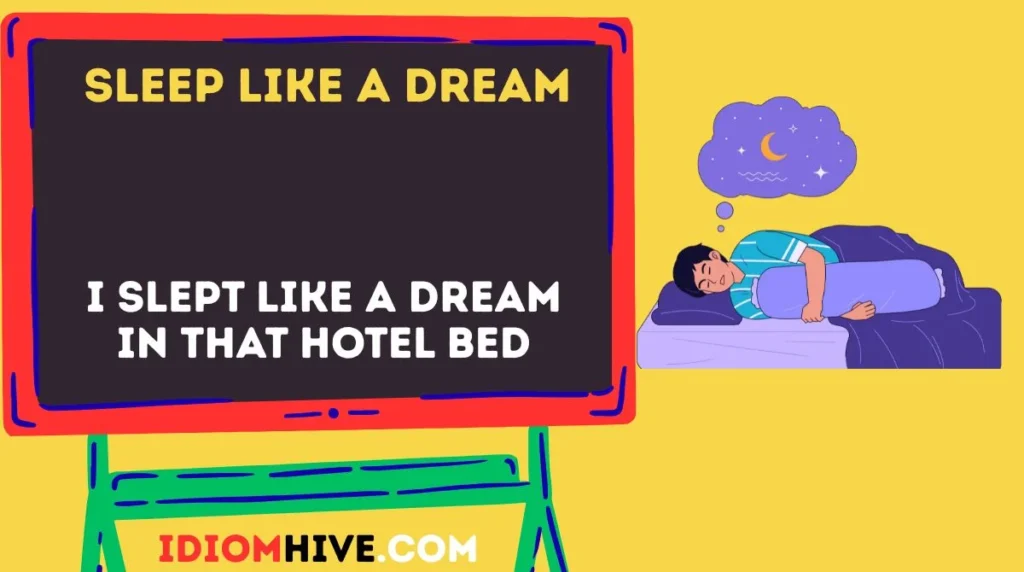
Meaning: Sleep very peacefully.
Example: “I slept like a dream in that hotel bed.”
Alternative Idiom: Sleep like a baby.
Reflection: Informal, often about comfort.
Idioms About Dreams in Success and Imagination
Dream job
Meaning: The perfect job one always wanted.
Example: “She finally landed her dream job as a travel writer.”
Alternative Idiom: Ideal job.
Reflection: Common in career conversations.
Dream home
Meaning: The house you’ve always wished for.
Example: “They bought their dream home by the beach.”
Alternative Idiom: Perfect house.
Reflection: Everyday informal use.
Dream team
Meaning: A perfect group of people working together.
Example: “This project has brought together a dream team of experts.”
Alternative Idiom: Perfect match.
Reflection: Used in professional and sports contexts.
Dream big
Meaning: Think of ambitious goals.
Example: “Dream big, and don’t be afraid of challenges.”
Alternative Idiom: Aim high.
Reflection: Common in inspirational contexts.
In a dream state
Meaning: Acting as if lost in thoughts or imagination.
Example: “She walked around in a dream state after hearing the good news.”
Alternative Idiom: In a daze.
Reflection: Neutral, used in personal contexts.
Dream up
Meaning: Invent or imagine something unusual.
Example: “Who dreamt up this brilliant idea?”
Alternative Idiom: Come up with.
Reflection: Informal, creative usage.
Dream ticket
Meaning: The best or most desirable combination.
Example: “That new actor-director duo is a dream ticket for the movie industry.”
Alternative Idiom: Winning combination.
Reflection: Informal, often used in media or politics.
How to Use These Idioms in Daily Life
- Speaking: Use idioms like “dream come true” or “living the dream” when chatting casually about achievements or happiness. In motivational talks, phrases like “chase your dreams” sound inspiring.
- Writing: In essays, blogs, or creative writing, idioms add flavor. For example, instead of writing “he had unrealistic goals,” you can say “he was building castles in the air.”
- Professional use: Business presentations often use idioms like “dream team” or “make your dreams a reality” to motivate employees.
Common Mistakes Learners Make With Idioms
- Wrong usage:
❌ “I am dream come true.”
✅ “Winning this prize is a dream come true.” - Literal confusion:
❌ “He is chasing rainbows in the sky.”
✅ “He is chasing rainbows by trying to get rich overnight.” - Mixing idioms:
❌ “She is living the pipe dream.”
✅ “She is living the dream.” / “It’s just a pipe dream.”
FAQs About Idioms for Dreams
1. What are dream idioms used for?
They help describe hopes, ambitions, imagination, and even unrealistic expectations in a more colorful and natural way.
2. Can I use dream idioms in formal writing?
Yes, but choose wisely. Idioms like “dream come true” or “make your dreams a reality” work in speeches or reports, while casual idioms like “sweet dreams” are better in informal writing.
3. Are dream idioms positive or negative?
Both. Some are uplifting (“chase your dreams”), while others highlight impracticality (“pipe dream”).
4. Do native speakers use these idioms often?
Absolutely! They are very common in daily conversations, media, and motivational contexts.
5. How can I practice dream idioms?
Try using them in your diary, social media posts, or role-play conversations with friends. Repetition makes them natural.
Conclusion
Dreams inspire us, motivate us, and sometimes even mislead us. That’s why idioms for dreams are so powerful—they capture the joy of success, the sweetness of imagination, and the caution of unrealistic expectations.
From “chasing your dreams” to “pipe dreams,” these phrases make your English more vibrant and relatable.
Use them in conversations, writing, or professional settings, and you’ll notice how much more expressive your language becomes. So, dare to dream, and let these idioms help you share those dreams with the world.