Language is more than just words — it carries emotions, culture, and imagination. One of the most colorful parts of English is its idioms. An idiom is a phrase where the meaning is different from the literal words.
For example, saying someone is “hooked” doesn’t mean they are caught on a fishing hook — it means they are addicted or obsessed with something.
Idioms for addiction are particularly useful because they describe the intensity of habits, obsessions, or dependencies in a creative way. Instead of simply saying “He can’t stop,” you might say “He’s glued to it.”
These expressions make conversations richer, more relatable, and easier to understand. Whether you’re talking about coffee, TV, gaming, or even unhealthy addictions, idioms help capture the emotional depth of those experiences.
By learning idioms for addiction, you not only expand your vocabulary but also add a native-like touch to your English speaking and writing.
Did You Know?
The word “addiction” originally came from a Latin term meaning to devote, to give over. In ancient Rome, it was even used in a legal sense — when someone was legally assigned to a creditor as repayment of debt, they were said to be “addicted.” Over time, the meaning shifted to strong habits and compulsions, leading to the idioms we use today!
Idioms for Addiction
Below you’ll find over 43 idioms for addiction, organized into four themes: general addiction idioms, obsession with habits, substance-related idioms, and modern lifestyle addictions. Each idiom includes meaning, example, similar expressions, and notes.
General Idioms About Addiction
Hooked
Meaning: Unable to stop doing something.
Example: “She’s hooked on that new TV series.”
Similar Idiom: Addicted to.
Note: Very common in casual conversations.
In Too Deep
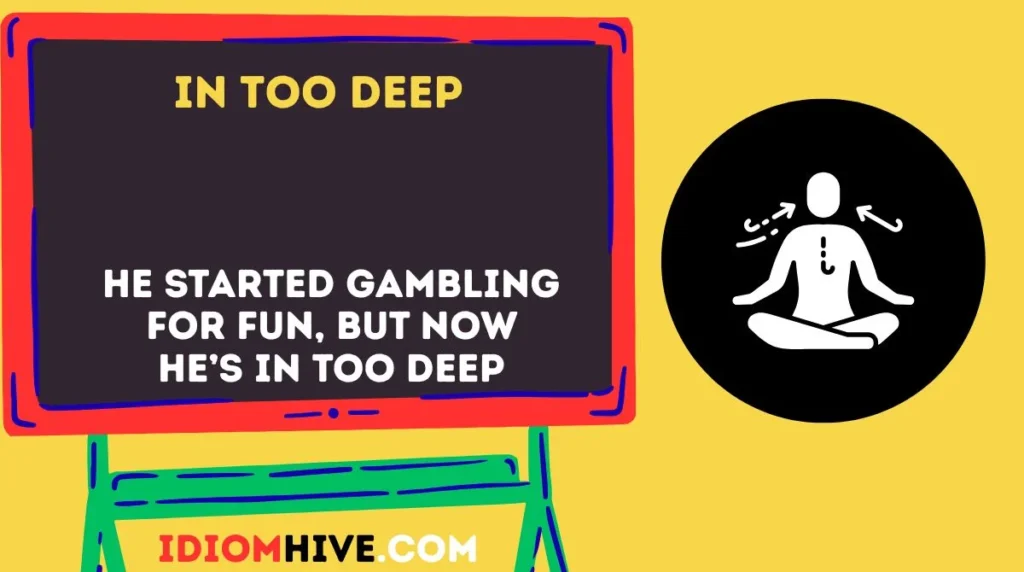
Meaning: So involved in something that it’s hard to stop.
Example: “He started gambling for fun, but now he’s in too deep.”
Similar Idiom: Over your head.
Note: Often used for unhealthy or risky addictions.
Slave to Something
Meaning: Controlled by a habit or obsession.
Example: “He’s a slave to his phone.”
Similar Idiom: Chained to.
Note: Informal but strong in tone.
Can’t Live Without It
Meaning: A way to exaggerate dependency.
Example: “I can’t live without coffee in the morning.”
Similar Idiom: Dependent on.
Note: Usually lighthearted, but can be serious too.
At the Mercy Of
Meaning: Controlled by a strong craving or habit.
Example: “She’s at the mercy of her shopping habits.”
Similar Idiom: Powerless against.
Note: More formal in tone.
Out of Control
Meaning: When a habit or addiction becomes unmanageable.
Example: “His gaming hours are out of control.”
Similar Idiom: Gone too far.
Note: Used in both casual and serious contexts.
In the Grip Of
Meaning: Strongly controlled by an addiction or emotion.
Example: “He was in the grip of alcohol.”
Similar Idiom: Held captive by.
Note: Often used in formal or dramatic writing.
Idioms for Obsessions and Habits
Bite the Habit
Meaning: To try to stop a bad addiction.
Example: “He’s trying to bite the habit of smoking.”
Similar Idiom: Kick the habit.
Note: Common in health-related discussions.
Kick the Habit
Meaning: Successfully stop an addiction.
Example: “She kicked the habit after years of smoking.”
Similar Idiom: Quit cold turkey.
Note: Widely used in everyday English.
Cold Turkey
Meaning: To quit an addiction suddenly without help.
Example: “He gave up sugar cold turkey.”
Similar Idiom: Quit abruptly.
Note: Common in conversations about smoking, drugs, or dieting.
Old Habits Die Hard
Meaning: It’s difficult to stop long-term habits.
Example: “He still wakes up early — old habits die hard.”
Similar Idiom: Hard to break.
Note: Informal, often used humorously.
Can’t Put It Down
Meaning: Can’t stop reading, watching, or using something.
Example: “That novel was so good I couldn’t put it down.”
Similar Idiom: Glued to it.
Note: Often used for books, shows, or phones.
Glued to It
Meaning: Paying complete attention, unable to stop.
Example: “He was glued to the football match.”
Similar Idiom: Stuck on it.
Note: Informal daily use.
Eat, Sleep, and Breathe It
Meaning: Completely obsessed with something.
Example: “She eats, sleeps, and breathes dance.”
Similar Idiom: Live and breathe it.
Note: Often used positively for passions.
Can’t Get Enough Of
Meaning: Always wanting more of something.
Example: “I can’t get enough of that new song.”
Similar Idiom: Obsessed with.
Note: Casual, often used positively.
Hard Habit to Break
Meaning: Something difficult to stop doing.
Example: “Checking your phone at night is a hard habit to break.”
Similar Idiom: Old habits die hard.
Note: Common in casual talks.
Add Fuel to the Fire
Meaning: Make a bad addiction worse.
Example: “Giving him money just added fuel to the fire.”
Similar Idiom: Worsen the situation.
Note: Used in both daily and formal settings.
Substance and Craving-Related Idioms
Monkey on Your Back
Meaning: A heavy addiction that’s hard to remove.
Example: “Drugs were a monkey on his back for years.”
Similar Idiom: Burden to carry.
Note: Often serious, related to drug or alcohol addiction.
Drown Your Sorrows
Meaning: Use alcohol to forget problems.
Example: “He went to the bar to drown his sorrows.”
Similar Idiom: Drink away troubles.
Note: Common in casual but serious contexts.
Hit the Bottle
Meaning: To drink alcohol heavily.
Example: “After losing his job, he hit the bottle.”
Similar Idiom: Knock back drinks.
Note: Informal, often serious.
Under the Influence
Meaning: Affected by alcohol or drugs.
Example: “He was driving under the influence.”
Similar Idiom: Intoxicated.
Note: Formal, legal contexts.
Chasing the Dragon
Meaning: Smoking heroin (slang).
Example: “He was caught chasing the dragon.”
Similar Idiom: Drug abuse.
Note: Informal, often used in documentaries or crime reports.
On the Wagon
Meaning: To stop drinking alcohol.
Example: “He’s been on the wagon for three months.”
Similar Idiom: Sober up.
Note: Common in informal speech.
Off the Wagon
Meaning: To start drinking again after quitting.
Example: “Sadly, he fell off the wagon last week.”
Similar Idiom: Relapsed.
Note: Informal daily use.
Take the Edge Off
Meaning: Use alcohol or drugs to reduce stress.
Example: “He had a drink to take the edge off.”
Similar Idiom: Calm the nerves.
Note: Common in casual speech.
Pop Pills
Meaning: To take drugs casually or regularly.
Example: “She pops pills to stay awake.”
Similar Idiom: Pill-popping.
Note: Informal slang.
Modern Lifestyle Addictions
Addicted to the Screen
Meaning: Spending too much time on devices.
Example: “Kids today are addicted to the screen.”
Similar Idiom: Glued to the phone.
Note: Common in modern discussions.
Social Media Junkie
Meaning: Someone obsessed with social media.
Example: “He’s a social media junkie who checks his phone every minute.”
Similar Idiom: Online addict.
Note: Informal modern slang.
Shop Till You Drop
Meaning: Shopping excessively.
Example: “She loves to shop till she drops.”
Similar Idiom: Shopping spree.
Note: Informal, humorous.
Workaholic
Meaning: Addicted to working.
Example: “He’s such a workaholic, he never takes breaks.”
Similar Idiom: Slave to work.
Note: Widely used in daily speech.
Coffee Addict
Meaning: Someone who drinks coffee excessively.
Example: “I’m a coffee addict — can’t start my day without it.”
Similar Idiom: Caffeine junkie.
Note: Informal, lighthearted.
News Junkie
Meaning: Someone addicted to reading or watching the news.
Example: “She’s a news junkie who checks updates all day.”
Similar Idiom: Current affairs addict.
Note: Informal, modern.
Fitness Freak
Meaning: Someone obsessed with exercise.
Example: “He’s a fitness freak, always at the gym.”
Similar Idiom: Gym rat.
Note: Informal, positive or negative.
Gamer at Heart
Meaning: Addicted or deeply devoted to gaming.
Example: “He’s a gamer at heart — he plays all night.”
Similar Idiom: Game addict.
Note: Common in youth language.
Binge-Watch
Meaning: Watch multiple episodes without stopping.
Example: “We binge-watched the whole season in one night.”
Similar Idiom: Marathon watching.
Note: Very common in modern English.
Foodie at Heart
Meaning: Someone obsessed with food.
Example: “She’s a foodie at heart, always trying new dishes.”
Similar Idiom: Food lover.
Note: Modern, casual.
How to Use These Idioms in Daily Life
- Speaking: Use idioms in friendly chats to sound natural. Example: Instead of saying “I use my phone too much,” say “I’m glued to my phone.”
- Writing: In blogs, stories, or creative writing, idioms add flavor and depth.
- Professional Use: Some idioms, like “workaholic” or “in the grip of,” can be used in workplace discussions, reports, or presentations.
Common Mistakes Learners Make With Idioms
- Wrong Usage:
❌ “He is cold turkey smoking.”
✅ “He quit smoking cold turkey.” - Too Literal:
❌ “She is glued to her book with real glue.”
✅ “She’s glued to her book” (figurative). - Mixing Idioms Incorrectly:
❌ “He kicked the monkey off his back.”
✅ “He kicked the habit” / “He has a monkey on his back.”
FAQs
1. What does “hooked” mean in addiction idioms?
It means being unable to stop doing something, like being obsessed or dependent on it.
2. Are addiction idioms always negative?
Not always. Some idioms like “eat, sleep, and breathe it” or “fitness freak” can be positive when talking about passion.
3. Can idioms for addiction be used in professional English?
Yes, but choose carefully. For example, “workaholic” is fine in the workplace, while “hit the bottle” is informal.
4. What’s the difference between “kick the habit” and “cold turkey”?
“Kick the habit” means quitting generally, while “cold turkey” means stopping suddenly without help.
5. How can I learn idioms faster?
Use them in daily conversations, write short sentences, and connect them to real-life situations.
Conclusion
Idioms for addiction are powerful tools to describe habits, obsessions, and dependencies in everyday English.
From “hooked” to “cold turkey” and “workaholic,” these phrases add depth and richness to how we express ourselves.
Whether you’re talking about coffee, shopping, or more serious issues like alcohol, idioms capture the intensity in a way plain words cannot. By learning and practicing these expressions, you’ll sound more fluent, natural, and expressive.
So, the next time you want to describe a strong habit, try one of these idioms — you’ll feel the difference in your English instantly!